

Overview
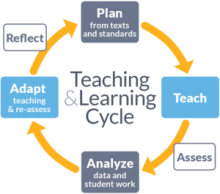
Engage in responsive cycles of teaching and learning with your students that are rooted in them demonstrating their thinking and learning in a variety of ways. Use classroom assessment systems and routines to gather information on student progress toward learning goals and to respond through feedback and instructional adaptations to ensure that all students demonstrate proficiency on grade-level standards and skills.

Plan & Teach
Start by setting learning targets to make success criteria for student work clear at the outset. Students should have a variety of opportunities and modalities to show what they know that are built right into curriculum and instruction through formative assessment.
Analyze & Adapt
Analyze student work from these formative assessments, and provide students with feedback that allows them to reflect on their learning, resolve misconceptions and make new connections. When this feedback and opportunity for revision is paired with adapting curriculum and instruction to meet identified student needs, students are able to demonstrate proficiency on summative assessments.

Engaging in responsive teaching and learning cycles produces bodies of evidence students and teachers can use to make informed decisions about how to move student learning forward and create more inclusive classrooms and schools. When assessment is viewed more broadly with varied and authentic opportunities to express learning, students can demonstrate their learning in culturally responsive ways.
Identifying Targets
The process of learning shouldn’t be a mystery. Learning targets provide students with tangible goals that they can understand and work toward. Rather than the teacher taking on all of the responsibility for meeting a lesson’s objective, learning targets, written in student-friendly language and frequently reflected on, transfer ownership for meeting objectives from the teacher to the student. (See examples below from pg. 27 Leaders of Their Own Learning)
Formative Assessment
Formative assessment is a process teachers and students use during instruction that provides feedback to adjust ongoing teaching moves and learning tactics. It is not a specific test, event, or bank of test items. When effectively implemented formative assessment as a process assists students in achieving intended instructional outcomes.
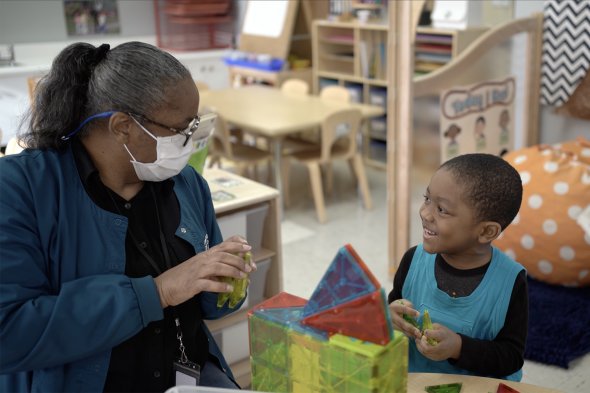
One type of formative assessment is Learning Stories. Originating in New Zealand through the work of Margaret Carr and Wendy Lee, Learning Stories describe the young child as a learner and document his/her/their unique learning journey. Learning stories focus on the child’s strengths, interests, growth, and successes in play and exploration. The emphasis on documenting learning through a narrative form places the child at the center of the documentation, as opposed to centering instruction. (Educa, 2017, The Magic of Learning Stories). Photos, videos, and descriptive narratives bring moments of learning to life and weave detailed individual portfolios that celebrate the whole child. Learning stories are meant to be a reflective tool for collaborating with families to interpret children’s learning and set intentions for supporting and extending learning.
A learning story has three central elements:
- NOTICE (observation of learning through a story and pictures)
- RECOGNIZE (Analysis of the learning)
- RESPOND (Identify what practices will strengthen, support, and extend learning)
Check out this video about Learning Stories
Educational Leadership Project: Learning Stories a Conversation with Wendy Lee
- Part 1: A Philosophical Approach
- Part 2: The Key Components
- Part 3: Culture in the Classroom
- Part 4: Bi-cultural Identity
- Part 5: Don’t Have Time for Learning Stories?
- Part 6: What is the Best Age for Learning Stories to be Used?
Analyzing student work samples
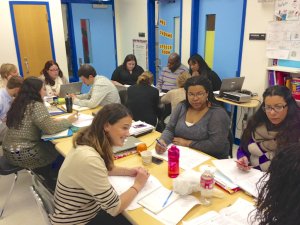
Engaging in a collaborative process of analyzing student work allows a group of educators to analyze the learning experiences they have designed for their students and determine their effectiveness. When teachers collaboratively analyze student work they can build understanding and agreement about the consistent use and interpretation of a rubric with the goal of improving student learning. This process encourages teachers to consider:
- What are my students’ strengths with regard to the required knowledge and skills?
- What are my student’s learning needs with regard to the required knowledge and skills?
- Do students have sufficient foundational content and process skills to approach new learning?
- How can I support student learning through scaffolding and differentiation?
The most important benefit of analyzing student work is improved student learning. Student responses, work and interactions demonstrate that all or almost all students are on track to achieve stated or implied grade-level and/or IEP-aligned learning goals.
Feedback & Revision
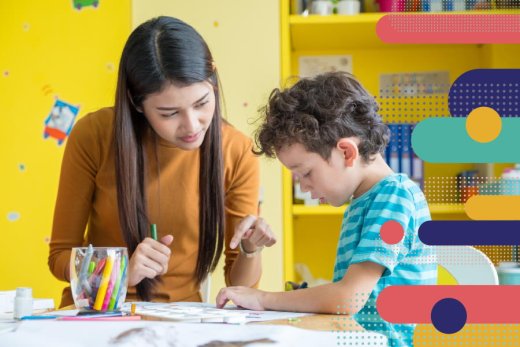
Teachers provide feedback that expands learning and understanding and encourages continued participation.
5 types of feedback include
- Scaffolding: The teacher often scaffolds for students who are having a hard time understanding a concept, answering a question, or completing an activity.
- Feedback loops: There are frequent feedback loops-back-and-forth-exchanges-between the teacher and the students.
- Prompting thought processes: The teacher often queries the students or prompts students to explain their thinking and rationale for responses and actions.
- Providing Information: The teacher often provides additional information to expand on students’ understanding or actions.
- Encouragement and affirmation: The teacher often offers encouragement for students’ efforts that increases student involvement and persistence.
Summative Assessment
Summative assessment in TK helps educators understand what children have learned and how they are developing at the end of a learning experience, such as a thematic unit or project. These assessments might include work samples, teacher observations, photos, or portfolios that reflect a child’s growth over time. While summative assessments in TK are often more informal than traditional tests, they still provide valuable insights when aligned with learning goals. Used alongside formative assessment, summative tools help ensure a comprehensive picture of each child’s progress. It’s important that these assessments allow children to demonstrate their learning in a variety of developmentally appropriate ways—such as through play, conversation, drawing, or storytelling—rather than relying solely on academic language or writing.
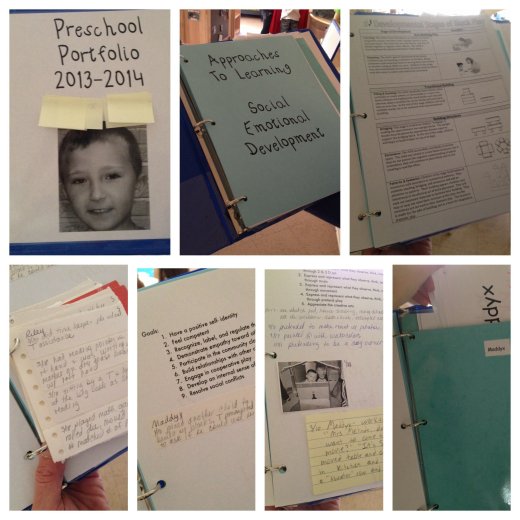
Portfolios are a great way to demonstrate student progress over time in your early education classroom. They can be used as tools to demonstrate each child’s individual progress from the beginning to the end of the school year.
This page was last updated on April 24, 2025