

Overview Link to this section
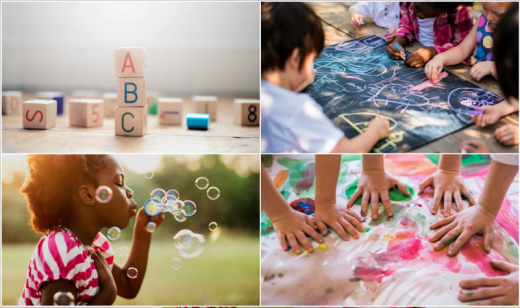
Learning occurs at the point of challenge. With each task or learning opportunity, support every student to find a way in (“access”) and be challenged (“demand”) to think or produce in new or expansive ways. This concept is also known as designing for a “low floor and a high ceiling”. Avoid over-scaffolding or simply asking students to memorize or receive information. Ultimately, we want each and every student to carry the cognitive load within the classroom.
Supporting Equitable Access & Demand
Link to this section
Student Artifacts Link to this section
-
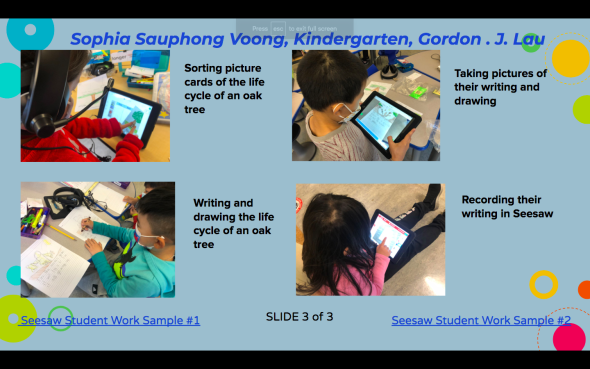
Seesaw Supporting Kindergarten Independence
By planning for each and every student, the educator created a space where students could receive support through modeling, whole group interactions, and time to engage and explore the content through Seesaw.
-
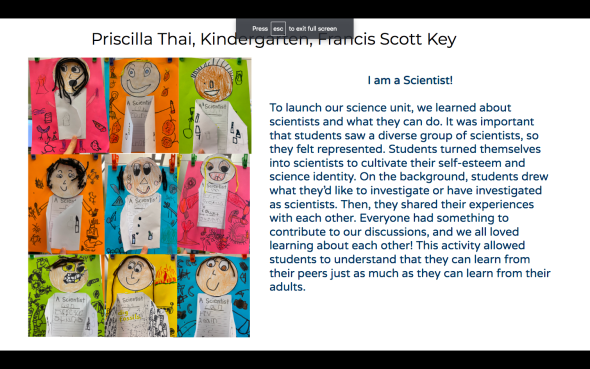
I am a Scientist!
Students learned about a diverse group of scientists and what scientists do. To cultivate their identity as scientists, students made images of themselves as scientists and included what they’d like to investigate. They shared their works with each other. Everyone had something to contribute to the discussion rooted in their identity and aspirations.
-
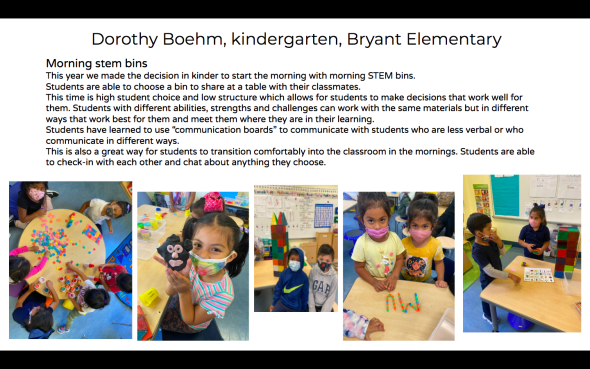
Morning STEM Bins
Kinders in this class start the morning with Morning STEM Bins. Students are able to choose a bin to share at a table with their classmates. This time is high student-choice and low structure which allows for students to make decisions that work well for them. Students with different abilities, strengths, and challenges can work with the same materials but in different ways that work best for them and meet them where they are in their learning.
Standards-Based Skills: Students will be able to...
- Gather information from sources in order to distinguish between evidence-based fact and opinion. (C3) (NGSS)
- Ask and answer questions and construct an argument and/or explanation with reasoning. (C3) (CCSS)
- Actively engage in group reading activities with purpose and understanding. (CCSS)
- With prompting and appropriate support, ask and answer questions, identify the main topic and retell key details of a grade level text. (CCSS) (GP) (NGSS)
- Use a combination of drawing, dictating, and writing to state an opinion and/or compose information about a topic or text. (CCSS)
- Read grade-appropriate texts and/or use media to obtain information to determine patterns in and/or evidence about the world. (CCSS) (NGSS)
- English learners read, analyze, interpret, and create a variety of literary and informational text types. (ELD)
- Learn that content is organized in different text types and across disciplines using text structure, language features. (ELD)
(These skills are taken from the kindergarten standards found within the - Common Core State Standards, Next Generation Science Standards, College Career and Civic Life Framework for Social Studies, ELD Framework, and SFUSD Graduate Profile.)
Reflection Questions Link to this section
- How can focusing on equitable access and demand develop academic ownership and honor students' experiences?
- What do access and demand currently look like in your practice? What is working well for students? How do you know?
- What are the implications for your own practice? What will you do first?
This page was last updated on April 25, 2023