

Overview Link to this section
Language is one of the most crucial tools that children acquire, one that is essential for cognitive development, reading achievement, and overall school performance, as well as for social relations. It allows people to share a society’s achievements and history and the deepest emotions. Language includes conventional sounds, gestures, and visual symbols, such as writing, that are used separately and jointly for purposes of communication. The human brain is “hard-wired” to learn language, a process quite similar in all children. Yet children differ a good deal as to when they use their first words, start to combine words into sentences, and use complex sentence forms to communicate meaning. Though children begin to develop language and literacy at birth, with nonverbal cues such as eye gaze and gestures, they arrive at preschool ready to communicate with symbols: words, signs, and pictures.
In preschool, we utilize The Creative Curriculum®, an early childhood curriculum that focuses on project-based investigations as a means for children to apply skills that address four areas of development: social/emotional, physical, cognitive, and language. The curriculum is designed to foster the development of the whole child through teacher-led, small and large group activities centered around 11 interest areas (blocks, dramatic play, toys and games, art, library, discovery, sand and water, music and movement, cooking, computers, and outdoors). The curriculum provides teachers with details on child development, classroom organization, teaching strategies, and engaging families in the learning process.
Priority Standards Link to this section
What students will know, what students will do, and what thinking skills students will develop to apply and transfer artistic understandings that endure within the discipline, leverage deeper understandings, and/or support readiness for success at the next grade level.
In Pre-K, we focus on these critical areas:
Oral Language Development
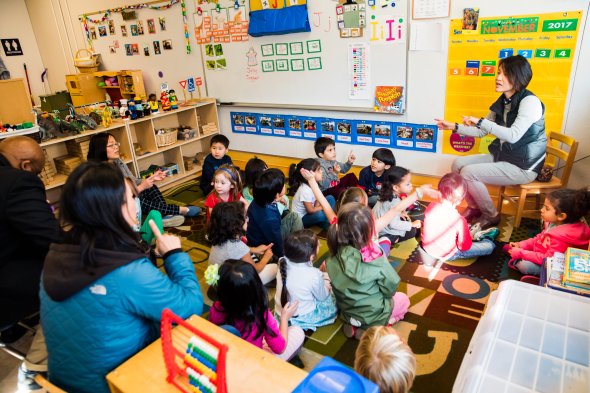
Oral language is the foundation for learning to read and write, and is critical for supporting the development of children’s early literacy skills. This video introduces some of the rule systems of language that children need to master to develop strong oral language skills, and stresses the important role that preschool teachers play in modeling language and providing a language-rich environment in the classroom
Phonological awareness
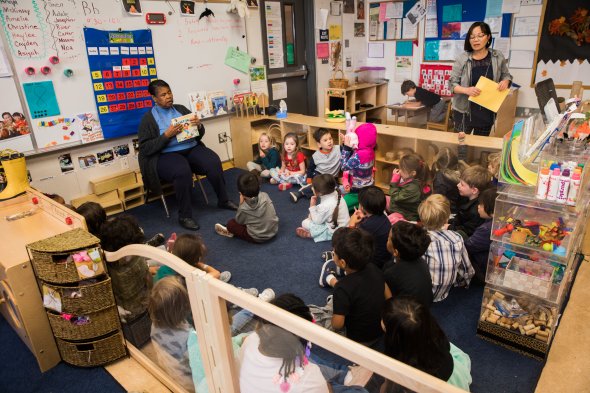
The ability to hear, recognize and play with the sounds in spoken language.
Alphabet Awareness
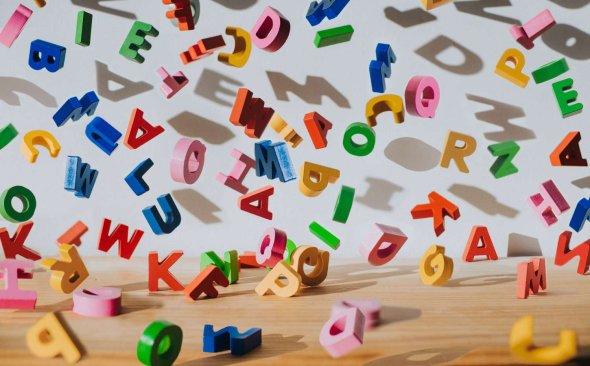
Alphabet knowledge is the ability to recognize and name uppercase and lowercase letters, recognize letter symbols in print, and know that there are sounds associated with each letter.
Concepts About Print
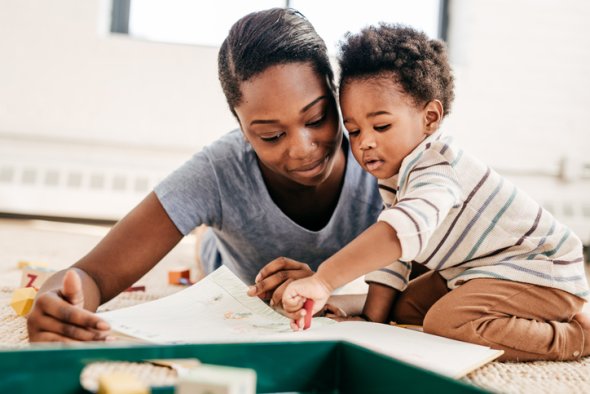
Awareness of 'how print works'. This includes the knowledge of the concept of what books, print, and written language are, and how they function.
Emergent writing with inventive spelling
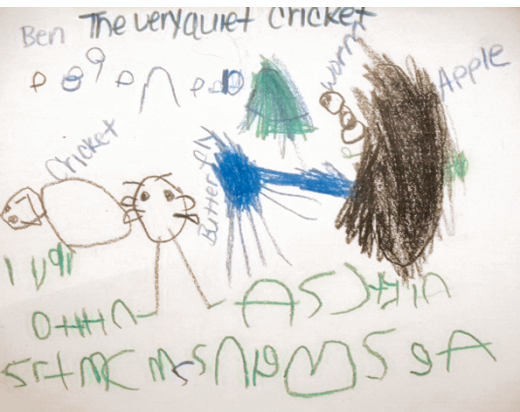
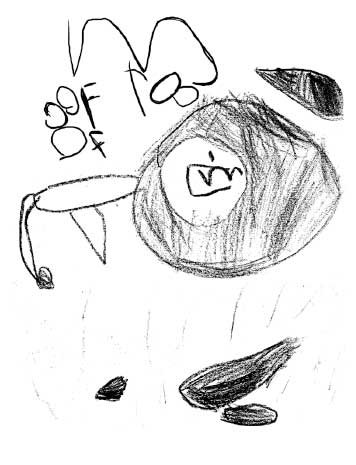
Emergent writing is young children's first attempt at the writing process. Children as young as 2 years old begin to imitate the act of writing by creating drawings and symbolic markings that represent their thoughts and ideas
Instruction: Signature Elements Link to this section
Below are signature elements of SFUSD Language & Literacy instruction that students should experience regularly throughout preschool and transitional kindergarten as they develop as speakers, listeners, readers, and writers.
Providing a Language Rich Environment
A language rich environment is important for supporting oral language development.
Interactive Read Aloud
Children’s storytelling skills and vocabulary development are supported through shared reading experiences. When children hear language around them, they are accumulating the data they need to use these skills and grasp the features of language. The practice of reading with children teaches the patterns of book structure and the general way that print works. When book reading is accompanied by explicit comments (this is the title of the book, author, illustrator) and actions, children learn more about the features of the book and how print works. Children learn the meaning of new words from listening to multiple readings of books as well as the story structure (beginning, middle, end, character, setting). Providing props and visuals helps to reinforce vocabulary and make the stories come alive!
Materials
Story Baskets: Story baskets are an excellent tool for preschoolers to practice speech, storytelling skills, imaginative play, and develop early literacy skills. They can be as simple or as complex as you like and don’t have to cost anything to put together. Use found objects from around your classroom and books you already own or can check out from the library to fill it. Simple, inexpensive, and a great way to encourage fun reading time!
Story Baskets:
- Provides a hands-on, tactile learning extension to storytelling
- Accessible to all children no matter their age group, language, or developmental stage
- Builds on students' schema (prior knowledge) and interest
- Introduces and reinforces new language and vocabulary with realia
- Helps children build concepts to understand their world further
- Promotes oral language and comprehension through repetition and retelling
- Engaging and fun!
Units
To learn more about the units of study, explore our EED Instructional Coherence Page: Essential Content: Creative Curriculum PK
Reflection Questions Link to this section
- How are students' developmental needs, communities, and experiences being reflected and honored, or how could they be?
- What opportunities do you see for developing equitable access & demand, inquiry, collaboration, and assessment for learning?
- What are the implications for your own practice? What strengths can you build upon? What will you do first?
Want more?
Video: Early childhood professionals must know how to support young children's language and literacy development. In this video, Dr. Theresa Bouley stresses that best practices in early literacy instruction must involve both spontaneous and planned daily activities focused on the five areas of literacy learning that best predict children's future reading and writing development. If early educators know what these five predictors are, they can not only plan daily meaningful lessons in these areas, but they can maximize their ability to catch spontaneous teachable moments throughout the day. Copyright 2015 by the Center for Early Childhood Education at Eastern Connecticut State University. 5 Predictors of Early Literacy
CA PTKLF Language and Literacy Development - Provide guidance on the wide range of language and literacy knowledge and skills that children age three to five and a half typically attain when attending a high-quality early education program.
Assessment Tip: Capturing videos of students at various points of the year is a great way to document students’ learning in the English Language Arts. Here’s a tutorial video that shows how you can easily capture videos of students, organize them into topical folders, and add tags for the skills being assessed using the district-provided Seesaw app. Need help getting started with Seesaw? Check out the Digital Learning Getting Started Guide for TK, or ask the Help Desk (help.sfusd.edu) to connect you with your school’s Digital Learning Cohort Partner.
This page was last updated on May 2, 2025