

Overview Link to this section
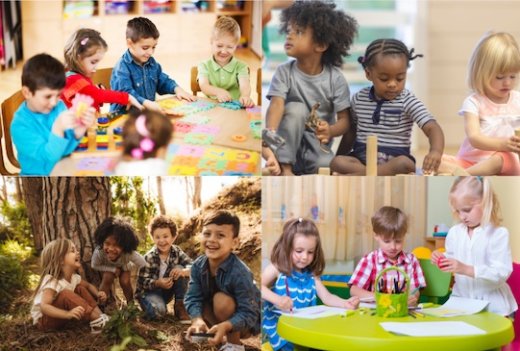
With each task or learning opportunity, every student will be supported to find a way in (“access”) and be challenged (“demand”) to think or produce in new or expansive ways. This concept is also known as designing for a “low floor and a high ceiling”. Avoid over scaffolding or simply asking students to memorize or receive information. Ultimately, we want every Pre-K student to begin carrying the cognitive load within the classroom.
Supporting Equitable Access and Demand Link to this section
Use these practices, and practices like these, to support student thinking and academic ownership
Universal Design for Learning (UDL)
Universal Design for Learning (UDL) is a framework for increasing access to educational environments and opportunities, including in early education settings. Learning environments, materials, and activities are planned ahead of time to welcome all learners. UDL supports ALL children, to help them engage more fully in learning. It doesn't take the place of individualized curriculum modifications necessary for particular children. See how the UDL framework supports ALL learners in the early childhood context.
Scaffolding Strategies
Meaningful interactions are the cornerstone of early childhood education. Scaffolding learning for young children helps them learn large concepts in smaller chunks. Part of scaffolding is meeting children where they are and by doing this, teachers make the learning accessible to all children. The goal is to guide, uplift and provide boundaries for children as they learn and grow.
Standards Based Skills: Students will be able to...
- Demonstrate curiosity and raise simple questions about objects and increased ability to raise questions events in their environment.
- Observe objects and events in the environment and describe them.
- Use language to communicate with others in familiar social situations for a variety of basic purposes, including describing, requesting, commenting, acknowledging, greeting, and rejecting.
- Attend to English oral language, in both real and pretend activity, relying on intonation, facial expressions, or the gestures of the speaker.
- Use accepted language and style during communication with both adults and children.
- Use language to construct short narratives that are real or fictional.
- Understand and use increasingly complex and longer sentences, including sentences that combine two phrases or two to three concepts to communicate ideas.
These standards are taken from Pre-Kindergarten standards found within the Preschool Learning Foundations volume 1 and volume 3 (Language and Literacy, Science, ELD)
Reflection Questions Link to this section
- How can focusing on equitable access and demand develop academic ownership and honor students' experiences?
- What do access and demand currently look like in your practice? What is working well for students? How do you know?
- What are the implications for your own practice? What will you do first?
This page was last updated on May 25, 2023