

Overview Link to this section
Our learning is often provisional and frequently changes with time. Students have an ever-increasing ability, with intentional time, space, and support to set goals, assess learning, track progress, and present their growth - creating an environment where they are co-designers of their learning.
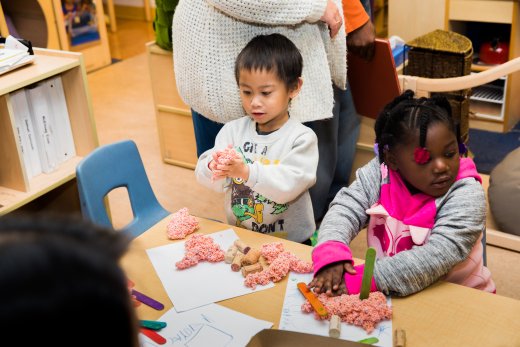
Support students to identify their strengths and challenges by building structures to support them in reflecting on their learning. Include opportunities for students to respond to peer and teacher feedback within instructional arcs. By reflecting on their own learning and that of their peers, students are better equipped to ask for what they need and to use this information to make decisions about their goals, their learning, and their future.
Supporting Assessment for Learning Link to this section
Use these practices, and practices like these, to support student thinking and academic ownership
Tell, Ask, Give
Students tell their peers what they liked about the work. Then, students ask a thoughtful question. This takes some modeling. Last, students give a positive suggestion to improve the work.
I used to think... Now I think...
This routine helps students to reflect on their thinking about a topic or issue and explore how and why that thinking has changed. It can be useful in consolidating new learning as students identify their new understandings, opinions, and beliefs. By examining and explaining how and why their thinking has changed, students are developing their reasoning abilities and recognizing causal relationships.
Models, Critique, & Descriptive Feedback
Ron Berger from EL Education demonstrates the transformational power of models, critique, and descriptive feedback to improve student work. Here he tells the story of Austin's Butterfly. First-grade students at Anser Charter School in Boise, ID, helped Austin take a scientific illustration of a butterfly through multiple drafts toward a high-quality final product.
Standards-Based Skills: Students will be able to...
- Demonstrate curiosity and raise simple questions about objects and increased ability to raise questions events in their environment.
- Observe objects and events in the environment and describe them.
- Use language to communicate with others in familiar social situations for a variety of basic purposes, including describing, requesting, commenting, acknowledging, greeting, and rejecting.
- Attend to English oral language, in both real and pretend activity, relying on intonation, facial expressions, or the gestures of the speaker.
- Use accepted language and style during communication with both adults and children.
- Use language to construct short narratives that are real or fictional.
- Understand and use increasingly complex and longer sentences, including sentences that combine two phrases or two to three concepts to communicate ideas.
These standards are taken from Pre-Kindergarten standards found within the Preschool Learning Foundations volume 1 and volume 3 (Language and Literacy, Science, ELD)
Reflection Questions Link to this section
- How can prioritizing assessment for learning develop academic ownership and honor students' experiences?
- Where does assessment for learning currently show up in your practice? What is working well for students? How do you know?
- What are the implications for your own practice? What will you do first?
This page was last updated on May 25, 2023